• Skip to primary navigation
  • Skip to main content

site logo
The Electronic Journal for English as a Second Language
search
  • Home
  • About TESL-EJ
  • Vols. 1-15 (1994-2012)
    • Volume 1
      • Volume 1, Number 1
      • Volume 1, Number 2
      • Volume 1, Number 3
      • Volume 1, Number 4
    • Volume 2
      • Volume 2, Number 1 — March 1996
      • Volume 2, Number 2 — September 1996
      • Volume 2, Number 3 — January 1997
      • Volume 2, Number 4 — June 1997
    • Volume 3
      • Volume 3, Number 1 — November 1997
      • Volume 3, Number 2 — March 1998
      • Volume 3, Number 3 — September 1998
      • Volume 3, Number 4 — January 1999
    • Volume 4
      • Volume 4, Number 1 — July 1999
      • Volume 4, Number 2 — November 1999
      • Volume 4, Number 3 — May 2000
      • Volume 4, Number 4 — December 2000
    • Volume 5
      • Volume 5, Number 1 — April 2001
      • Volume 5, Number 2 — September 2001
      • Volume 5, Number 3 — December 2001
      • Volume 5, Number 4 — March 2002
    • Volume 6
      • Volume 6, Number 1 — June 2002
      • Volume 6, Number 2 — September 2002
      • Volume 6, Number 3 — December 2002
      • Volume 6, Number 4 — March 2003
    • Volume 7
      • Volume 7, Number 1 — June 2003
      • Volume 7, Number 2 — September 2003
      • Volume 7, Number 3 — December 2003
      • Volume 7, Number 4 — March 2004
    • Volume 8
      • Volume 8, Number 1 — June 2004
      • Volume 8, Number 2 — September 2004
      • Volume 8, Number 3 — December 2004
      • Volume 8, Number 4 — March 2005
    • Volume 9
      • Volume 9, Number 1 — June 2005
      • Volume 9, Number 2 — September 2005
      • Volume 9, Number 3 — December 2005
      • Volume 9, Number 4 — March 2006
    • Volume 10
      • Volume 10, Number 1 — June 2006
      • Volume 10, Number 2 — September 2006
      • Volume 10, Number 3 — December 2006
      • Volume 10, Number 4 — March 2007
    • Volume 11
      • Volume 11, Number 1 — June 2007
      • Volume 11, Number 2 — September 2007
      • Volume 11, Number 3 — December 2007
      • Volume 11, Number 4 — March 2008
    • Volume 12
      • Volume 12, Number 1 — June 2008
      • Volume 12, Number 2 — September 2008
      • Volume 12, Number 3 — December 2008
      • Volume 12, Number 4 — March 2009
    • Volume 13
      • Volume 13, Number 1 — June 2009
      • Volume 13, Number 2 — September 2009
      • Volume 13, Number 3 — December 2009
      • Volume 13, Number 4 — March 2010
    • Volume 14
      • Volume 14, Number 1 — June 2010
      • Volume 14, Number 2 – September 2010
      • Volume 14, Number 3 – December 2010
      • Volume 14, Number 4 – March 2011
    • Volume 15
      • Volume 15, Number 1 — June 2011
      • Volume 15, Number 2 — September 2011
      • Volume 15, Number 3 — December 2011
      • Volume 15, Number 4 — March 2012
  • Vols. 16-Current
    • Volume 16
      • Volume 16, Number 1 — June 2012
      • Volume 16, Number 2 — September 2012
      • Volume 16, Number 3 — December 2012
      • Volume 16, Number 4 – March 2013
    • Volume 17
      • Volume 17, Number 1 – May 2013
      • Volume 17, Number 2 – August 2013
      • Volume 17, Number 3 – November 2013
      • Volume 17, Number 4 – February 2014
    • Volume 18
      • Volume 18, Number 1 – May 2014
      • Volume 18, Number 2 – August 2014
      • Volume 18, Number 3 – November 2014
      • Volume 18, Number 4 – February 2015
    • Volume 19
      • Volume 19, Number 1 – May 2015
      • Volume 19, Number 2 – August 2015
      • Volume 19, Number 3 – November 2015
      • Volume 19, Number 4 – February 2016
    • Volume 20
      • Volume 20, Number 1 – May 2016
      • Volume 20, Number 2 – August 2016
      • Volume 20, Number 3 – November 2016
      • Volume 20, Number 4 – February 2017
    • Volume 21
      • Volume 21, Number 1 – May 2017
      • Volume 21, Number 2 – August 2017
      • Volume 21, Number 3 – November 2017
      • Volume 21, Number 4 – February 2018
    • Volume 22
      • Volume 22, Number 1 – May 2018
      • Volume 22, Number 2 – August 2018
      • Volume 22, Number 3 – November 2018
      • Volume 22, Number 4 – February 2019
    • Volume 23
      • Volume 23, Number 1 – May 2019
      • Volume 23, Number 2 – August 2019
      • Volume 23, Number 3 – November 2019
      • Volume 23, Number 4 – February 2020
    • Volume 24
      • Volume 24, Number 1 – May 2020
      • Volume 24, Number 2 – August 2020
      • Volume 24, Number 3 – November 2020
      • Volume 24, Number 4 – February 2021
    • Volume 25
      • Volume 25, Number 1 – May 2021
      • Volume 25, Number 2 – August 2021
      • Volume 25, Number 3 – November 2021
      • Volume 25, Number 4 – February 2022
    • Volume 26
      • Volume 26, Number 1 – May 2022
      • Volume 26, Number 2 – August 2022
      • Volume 26, Number 3 – November 2022
      • Volume 26, Number 4 – February 2023
    • Volume 27
      • Volume 27, Number 1 – May 2023
      • Volume 27, Number 2 – August 2023
      • Volume 27, Number 3 – November 2023
      • Volume 27, Number 4 – February 2024
    • Volume 28
      • Volume 28, Number 1 – May 2024
      • Volume 28, Number 2 – August 2024
      • Volume 28, Number 3 – November 2024
      • Volume 28, Number 4 – February 2025
    • Volume 29
      • Volume 29, Number 1 – May 2025
      • Volume 29, Number 2 – August 2025
      • Volume 29, Number 3 – November 2025
      • Volume 29, Number 4 – February 2026
    • Volume 30
      • Volume 30, Number 1 – May 2026
      • Volume 30, Number 2 – August 2026
  • Books
  • How to Submit
    • Submission Info
    • Ethical Standards for Authors and Reviewers
    • TESL-EJ Style Sheet for Authors
    • TESL-EJ Tips for Authors
    • Book Review Policy
    • Media Review Policy
    • TESL-EJ Special issues
    • APA Style Guide
  • Editorial Board
  • Support

Catching Up or Leading the Way: American Education in the Age of Globalization

June 2011 – Volume 15, Number 1

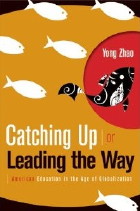
Catching Up or Leading the Way: American Education in the Age of Globalization

Author: Yong Zhao (2009)  
Publisher: Alexandria, Virginia USA: ASCD
Pages ISBN Price
229 pages 9781416608738 $26.95 USD

Yong Zhao argues in Catching Up or Leading the Way that more standardization, increased outcome-based accountability, and testing only a few subjects will not prepare American youth for success in an age of globalization. Zhao does, however, recognize the strengths of American education, and thus puts forth a vision for American schools to promote creativity, talent diversity, plus global and digital competencies. American schools should continue to lead the way, Zhao says, not play catch-up with other countries.

Zhao, who grew up in China but currently lives in the USA, grew more perplexed as he watched his own children attend US schools that became increasingly focused on test scores. Zhao decided to modify his publishing plans, scrapping an original prospectus to investigate China’s educational system and instead wrote this book to warn about the damages of increased emphasis on high stakes testing. His goal: Change the current US education discourse.

The book’s opening provides an historical account of reform efforts in the USA–a useful overview to help frame an understanding of current reform efforts (No Child Left Behind, NCLB). Subsequently, Zhao offers a glimpse into China’s educational system and provides a productive overview of the dangers of centralization, standardization, and testing through a discussion of topics like American glorification of China’s education system, the meaning of a good education (i.e., high test scores do not equal high ability), the myth about there being more English speakers living in China than in the USA, and more.

Later, Zhao devotes a chapter to examples of globalization in occurrence right now and demonstrates why schools need to re-evaluate which skills are necessary for the 21st century. Examples of globalization include fragmentation of production (outsourcing, offshoring, job losses) and free movement of peoples (migration, cheap labor, national identity crisis), and such examples frame the challenges that face schools. He refers to what he calls “death of distance”–– the notion that employers can theoretically find the talent they need from anywhere around the globe by either moving a business to where talent is located, or directly moving the talent to wherever it’s needed. And that, Zhao argues, requires a “global competence” skill set that should be required knowledge in schools.

It should also be noted that Zhao’s treatment of his subject matter–his obvious passion for it–engages the reader. In particular, the Technology chapter, which describes the virtual world as a new world and outlines parallel schoolroom challenges, resonated best with my graduate students taking a course called Assessment and Evaluation of English Language Learners (where the book was required reading). In Technology, Zhao provides examples of virtual worlds in which people can interact, play, and conduct businesses–they can gold-farm, develop virtual property, play e-sports, Google, or update Facebook. He demonstrates how the rules of engagement, the indicators of danger and abuse, the tools used to participate and the consequences of our actions are different from those in the physical world. He questions whether our children are knowledgeable enough to fully participate in this virtual world.

Through feedback, my graduate students enjoyed Zhao’s style–his readability, his interesting facts in support of ideas, and his catchy headings such as Japanese Toilet Cleaners and American English Teachers: Unique Talents, or Madonna and Soccer: More Customers, More Value. Catching Up or Leading the Way is more than a criticism of the current NCLB educational reform movement. It’s a major contribution toward understanding the current educational reforms from a global and historical perspective that provides needed insight into the skills and knowledge critical in today’s changing world. It’s highly recommended reading for teachers, future teachers, policymakers, curriculum directors, and school administrators.

Reviewed by

Kate Mahoney, State University of New York (SUNY) at Fredonia
<kate.mahoneyatmarkfredonia.edu>

© Copyright rests with authors. Please cite TESL-EJ appropriately.

Editor’s Note: The HTML version contains no page numbers. Please use the PDF version of this article for citations.

© 1994–2026 TESL-EJ, ISSN 1072-4303
Copyright of articles rests with the authors.