• Skip to primary navigation
  • Skip to main content

site logo
The Electronic Journal for English as a Second Language
search
  • Home
  • About TESL-EJ
  • Vols. 1-15 (1994-2012)
    • Volume 1
      • Volume 1, Number 1
      • Volume 1, Number 2
      • Volume 1, Number 3
      • Volume 1, Number 4
    • Volume 2
      • Volume 2, Number 1 — March 1996
      • Volume 2, Number 2 — September 1996
      • Volume 2, Number 3 — January 1997
      • Volume 2, Number 4 — June 1997
    • Volume 3
      • Volume 3, Number 1 — November 1997
      • Volume 3, Number 2 — March 1998
      • Volume 3, Number 3 — September 1998
      • Volume 3, Number 4 — January 1999
    • Volume 4
      • Volume 4, Number 1 — July 1999
      • Volume 4, Number 2 — November 1999
      • Volume 4, Number 3 — May 2000
      • Volume 4, Number 4 — December 2000
    • Volume 5
      • Volume 5, Number 1 — April 2001
      • Volume 5, Number 2 — September 2001
      • Volume 5, Number 3 — December 2001
      • Volume 5, Number 4 — March 2002
    • Volume 6
      • Volume 6, Number 1 — June 2002
      • Volume 6, Number 2 — September 2002
      • Volume 6, Number 3 — December 2002
      • Volume 6, Number 4 — March 2003
    • Volume 7
      • Volume 7, Number 1 — June 2003
      • Volume 7, Number 2 — September 2003
      • Volume 7, Number 3 — December 2003
      • Volume 7, Number 4 — March 2004
    • Volume 8
      • Volume 8, Number 1 — June 2004
      • Volume 8, Number 2 — September 2004
      • Volume 8, Number 3 — December 2004
      • Volume 8, Number 4 — March 2005
    • Volume 9
      • Volume 9, Number 1 — June 2005
      • Volume 9, Number 2 — September 2005
      • Volume 9, Number 3 — December 2005
      • Volume 9, Number 4 — March 2006
    • Volume 10
      • Volume 10, Number 1 — June 2006
      • Volume 10, Number 2 — September 2006
      • Volume 10, Number 3 — December 2006
      • Volume 10, Number 4 — March 2007
    • Volume 11
      • Volume 11, Number 1 — June 2007
      • Volume 11, Number 2 — September 2007
      • Volume 11, Number 3 — December 2007
      • Volume 11, Number 4 — March 2008
    • Volume 12
      • Volume 12, Number 1 — June 2008
      • Volume 12, Number 2 — September 2008
      • Volume 12, Number 3 — December 2008
      • Volume 12, Number 4 — March 2009
    • Volume 13
      • Volume 13, Number 1 — June 2009
      • Volume 13, Number 2 — September 2009
      • Volume 13, Number 3 — December 2009
      • Volume 13, Number 4 — March 2010
    • Volume 14
      • Volume 14, Number 1 — June 2010
      • Volume 14, Number 2 – September 2010
      • Volume 14, Number 3 – December 2010
      • Volume 14, Number 4 – March 2011
    • Volume 15
      • Volume 15, Number 1 — June 2011
      • Volume 15, Number 2 — September 2011
      • Volume 15, Number 3 — December 2011
      • Volume 15, Number 4 — March 2012
  • Vols. 16-Current
    • Volume 16
      • Volume 16, Number 1 — June 2012
      • Volume 16, Number 2 — September 2012
      • Volume 16, Number 3 — December 2012
      • Volume 16, Number 4 – March 2013
    • Volume 17
      • Volume 17, Number 1 – May 2013
      • Volume 17, Number 2 – August 2013
      • Volume 17, Number 3 – November 2013
      • Volume 17, Number 4 – February 2014
    • Volume 18
      • Volume 18, Number 1 – May 2014
      • Volume 18, Number 2 – August 2014
      • Volume 18, Number 3 – November 2014
      • Volume 18, Number 4 – February 2015
    • Volume 19
      • Volume 19, Number 1 – May 2015
      • Volume 19, Number 2 – August 2015
      • Volume 19, Number 3 – November 2015
      • Volume 19, Number 4 – February 2016
    • Volume 20
      • Volume 20, Number 1 – May 2016
      • Volume 20, Number 2 – August 2016
      • Volume 20, Number 3 – November 2016
      • Volume 20, Number 4 – February 2017
    • Volume 21
      • Volume 21, Number 1 – May 2017
      • Volume 21, Number 2 – August 2017
      • Volume 21, Number 3 – November 2017
      • Volume 21, Number 4 – February 2018
    • Volume 22
      • Volume 22, Number 1 – May 2018
      • Volume 22, Number 2 – August 2018
      • Volume 22, Number 3 – November 2018
      • Volume 22, Number 4 – February 2019
    • Volume 23
      • Volume 23, Number 1 – May 2019
      • Volume 23, Number 2 – August 2019
      • Volume 23, Number 3 – November 2019
      • Volume 23, Number 4 – February 2020
    • Volume 24
      • Volume 24, Number 1 – May 2020
      • Volume 24, Number 2 – August 2020
      • Volume 24, Number 3 – November 2020
      • Volume 24, Number 4 – February 2021
    • Volume 25
      • Volume 25, Number 1 – May 2021
      • Volume 25, Number 2 – August 2021
      • Volume 25, Number 3 – November 2021
      • Volume 25, Number 4 – February 2022
    • Volume 26
      • Volume 26, Number 1 – May 2022
      • Volume 26, Number 2 – August 2022
      • Volume 26, Number 3 – November 2022
      • Volume 26, Number 4 – February 2023
    • Volume 27
      • Volume 27, Number 1 – May 2023
      • Volume 27, Number 2 – August 2023
      • Volume 27, Number 3 – November 2023
      • Volume 27, Number 4 – February 2024
    • Volume 28
      • Volume 28, Number 1 – May 2024
      • Volume 28, Number 2 – August 2024
      • Volume 28, Number 3 – November 2024
      • Volume 28, Number 4 – February 2025
    • Volume 29
      • Volume 29, Number 1 – May 2025
      • Volume 29, Number 2 – August 2025
      • Volume 29, Number 3 – November 2025
      • Volume 29, Number 4 – February 2026
    • Volume 30
      • Volume 30, Number 1 – May 2026
      • Volume 30, Number 2 – August 2026
  • Books
  • How to Submit
    • Submission Info
    • Ethical Standards for Authors and Reviewers
    • TESL-EJ Style Sheet for Authors
    • TESL-EJ Tips for Authors
    • Book Review Policy
    • Media Review Policy
    • TESL-EJ Special issues
    • APA Style Guide
  • Editorial Board
  • Support

Bringing Technology into the Classroom

June 2011 – Volume 15, Number 1

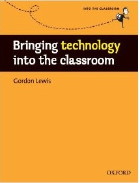
Bringing Technology into the Classroom

Author: Gordon Lewis (2010)  
Publisher: Oxford University Press, Inc. New York, NY, USA
Pages ISBN Price
96 pages 0194425940 $16.95 USD

Bringing Technology into the Classroom works from the premise–one held by many educators–that classrooms are very boring places, although they don’t have to be. Thus, the primary purpose of the book is to show the importance of technology in education and the new possibilities it holds for so-called ‘smart classes.’ Another purpose of the text is to show readers the availability of diverse tools, and their applicability to teaching with technology, either in or out of the classroom. Gordon Lewis successfully illustrates how simple it is to respond to students’ individual differences. He also shows the value of investing in as many options as possible for the students, in order to allow them to select whatever interests them, while taking into account the considerable range of pedagogies in teaching and education.

Through technology, and particularly the tools suggested, courses can be delivered in a variety of ways, while covering most course topics. In addition, using such technologies, educators can synergise their efforts to explain their lessons through a variety of tools. That said, Lewis is careful to warn readers that technology itself cannot assure learning and does not lead students to absolute knowledge. However, having an accurate plan and a skilled instructor in instructional technology are the most essential factors and the basic elements of delivering a successful technology-based course.

This book complements recent and promising fields that propose similar theoretical and practical perspectives. It encompasses a variety of new learning approaches that make content and materials available on one of the learning management systems (LMS) or use interactive tools on the internet. The fields include: Computer-assisted learning (CAL), Computer-based learning (CBL), Technology-enhanced learning (TEL), Computer-supported learning (CSL), web-based training, and asynchronous and synchronous learning.

Bringing Technology into the Classroom has a clear organization; the units are distributed logically, according to the time of each invention and the chronological order of technologies. The terminology is clear, suitable for all levels of readers. When a new concept is presented, an explanation and details follow. This valuable reference is designed for instructors in diverse fields, bridging theory and practice. Included are suggestions on how to introduce technology into classrooms, either for novice technology users or those who are familiar with some aspects of technology.

The book itself has five parts–subdivided into twelve units. Every unit presents useful definitions for basic terms, explanations about specific types of technology and how they work, and tips for classroom use.

Part 1 describes the value of understanding the current teaching environment and how to introduce new technologies in the classroom, especially those that will match the teaching environment at a particular institution. This section also shows how to establish connections with various technologies and describes the procedures necessary to operate and organise such technologies. It also explains how to deal with security matters on the Internet, and sheds light on proper implementation of support training and continuous evaluation of the activities conveyed via technology.

Part 2 illustrates the use a number of offline tools, their functions and what they are composed of, and most crucially, how they can be brought into the classroom to augment the learning process. An example of one of these offline tools is the Interactive Whiteboards (IWB).

Part 3 describes several online tools and how they can be used in the classrooms; these tools need the learners to work outside their classroom in extended time and they need to be connected asynchronously and synchronously. Some of these online tools are email, chat, text messaging, bookmarking, and webquests. Many of these tools are already used in today’s classrooms, of course.

Part 4 discusses the most up-to-date and advanced generation of tools used in Web 2.0. Web 2.0 tools differ from previous generations of tools, as they enable the user to participate in an entirely open, shared dynamic environment. These tools allow the users to create and share new content, including editing and commenting on the contents written by other contributors. Such tools include: blogs, wikis, podcasts, social networking, and digital portfolios.

Part 5 concludes with a discussion of individual differences, and the future of instructional technologies.

I highly recommended this text to teachers looking to improve their teaching styles in order to involve their students in innovative activities. In addition, it could be practical for trainee teachers, as it could help them in new teaching practices mediated by technology. This could, in turn affect teachers’ motivation and students’ active involvement in class.

Reviewed by

Ahmed A. Al Khateeb
Al Ahssa College of Health Sciences, Saudi Arabia
<ahmed_9114atmarkhotmail.com>

© Copyright rests with authors. Please cite TESL-EJ appropriately.

Editor’s Note: The HTML version contains no page numbers. Please use the PDF version of this article for citations.

© 1994–2026 TESL-EJ, ISSN 1072-4303
Copyright of articles rests with the authors.