

March 2012 – Volume 15, Number 4
Sociocognitive Perspectives on Language Use and Language Learning |
|||
| Author: | Rob Batstone (Ed.) (2010) | 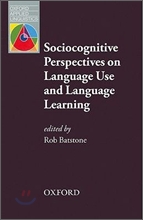 |
|
| Publisher: | Oxford University Press | ||
| Pages | ISBN | Price | |
|---|---|---|---|
| 252 pages | 978-0-19-442477-6 | $33.95 USD | |
Rob Batstone’s Sociocognitive Perspectives on Language Use and Language Learning is an excellent resource for teachers and researchers. The volume argues that a proper treatment of language acquisition requires inclusion of both cognitive and social aspects—and that neither can be divorced from the other if we want to reach a comprehensive understanding of second language development. The purpose of this volume is to present the works of various scholars who aim to find a synthesis between the cognitive and social elements in Second Language Acquisition (SLA) studies in order to account for the complexities of second language learning, use, and teaching.
The book is divided into three thematic sections each of which has four chapters. Part I, consists of chapters that situate sociocognitive perspectives both theoretically and in relation to the existing paradigms in SLA. In Chapter 1, Batstone provides a clear picture of analytic and holistic perspectives to sociocognition by giving specific examples to illustrate the characteristics of and distinctions between the two. In the next three chapters, Atkinson (Ch. 2), Larsen-Freeman (Ch. 3), and Tarone (Ch. 4) delineate their own sociocognitive approaches, which draw on situated cognition, Complexity Theory, and, sociolinguistics, respectively. These authors explain their sociocognitive approaches and some concepts central to their frameworks —such as alignment and soft assembly. What is especially stimulating in these chapters is the authors’ treatment of traditional theoretical constructs in SLA from their sociocognitive perspectives. For example, while Atkinson illustrates how attention cannot be meaningfully accounted for from a merely cognitivist point of view, Larsen-Freeman revisits vocabulary acquisition and interaction from a Complexity Theory perspective. Similarly, Tarone makes a strong case for how social interaction influences input, interaction, and output, proposing a variationist perspective as an alternative to the traditional conceptualization of these three concepts. Overall, these chapters problematize the theoretical constructs that have traditionally been conceived as primarily cognitive in SLA studies, emphasize the dynamism and variation in SLA, and offer compelling theoretical alternatives. However, since these chapters introduce relatively new concepts from other fields, at times, perhaps inevitably, they can be challenging for some readers. Yet, the authors’ arguments are clear and well supported. Interested readers might consider referring to the other publications of these scholars or the works cited for a more detailed explanation of the terms and theories introduced in these chapters. Overall, the chapters in Part I present promising theoretical frameworks for SLA studies that capture both the cognitive and the social aspects of SLA and that allow researchers to investigate the interactions between the two.
While the chapters in Part I focus on the theoretical issues regarding sociocognitive approaches supported by empirical evidence, the chapters in Part II comprise empirical studies that demonstrate how the social and cognitive determinants of language use and learning interact. The first two chapters explore the interpersonal aspects of sociocognition in language development. In Chapter 5, Duff and Kobayashi present a case for the language socialization paradigm based on Kobayashi’s research in a study abroad context in Canada. This research not only provides evidence for the interplay among cognitive, cultural, and social aspects of language development but also shows how audience, task, prior experiences including native language, oral interactions, material tools, and instruction have a direct influence on second language socialization. In Chapter 6, Yates, Nicholas, and de Courcy report the language development of Iraqi refugees in Australia and look at the role age and gender play, using both quantitative and qualitative research methods. In the next two chapters, drawing on Sociocultural Theory, Swain (Ch. 7) and Lantolf (Ch. 8) investigate how sociocognition guides and mediates second language learning on the intrapersonal level through languaging and gesture, respectively. Resonating with the main theme of the volume, these chapters claim that the cognitive and the social aspects of language learning are inextricably intertwined and language learning is multimodal. One of the strengths of Part II is that these chapters cover a range of contexts (Canada, Australia), second languages (English, French), and populations (international students, immigrants). This section also adds more sociocognitive theoretical frameworks to the ones introduced in Part I, i.e., language socialization and communities of practice paradigms as well as Sociocultural Theory, hence providing readers more sociocognitive alternatives.
Similar to Part II, the chapters in Part III examine the role interaction plays in language development, but focus more on the sociocognitive factors that influence second language classroom. The classroom-based studies in this section primarily deal with attention to form and feedback in language classrooms. The first three chapters examine the interplay between sociocognitive factors and teacher feedback. In Chapter 9, Ellis discusses the cognitive, social, and psychological determinants of corrective feedback in the literature and argues for inclusion of all three for a comprehensive understanding of corrective feedback. According to Ellis, with its focus on dialogic interaction, Sociocultural Theory is the closest framework for such an understanding of the contentious issue of corrective feedback. Utilizing both qualitative and quantitative research methods, Chapter 10 reports Storch and Wigglesworth’s study on direct and indirect feedback. The authors examine the relationship between different forms of feedback and level of engagement as well as if the level of engagement influences the revisions. Similar to Storch and Wigglesworth, Toth (Ch. 11) reports both the quantitative and qualitative results of an empirical study on form-focused classroom interaction but this time on the interaction between the teacher and the students. Based on relevance theory, the author explores the role of discourse cohesion and shared goals on learner engagement in two different Spanish language classes. While the first three chapters of this section deal with teacher feedback the last chapter by Philp and Mackey explores the social and personal factors that influence peer feedback. Overall, these chapters cover different types of feedback—direct, indirect, teacher, peer, written, and oral. While Ellis provides guidelines for teachers regarding feedback, Storch and Wigglesworth explore the uptake of written teacher feedback. As Toth investigates successful and not-so-successful feedback strategies in teacher led discourse, Philp and Mackey look into the social dynamics of peer feedback. Therefore, I believe teachers and researchers that are interested in feedback and action research will especially find the chapters in Part III very useful.
If the recent publications in the last decade on the sociocognitive perspectives in SLA are taken as an indication, there is a growing interest in frameworks that advocate a more balanced treatment of cognitive and social determinants of SLA—e.g., Atkinson (2011), Kramsch (2002), Larsen-Freeman and Cameron (2008), and van Lier (2004). This edited volume by Batstone contributes to that literature by bringing several sociocognitive approaches and empirical studies together. This book will especially be stimulating for readers interested in the ways social and cognitive can be brought together in teaching and research. Another advantage of this book is that it discusses both theoretical and empirical issues as well as pedagogical concerns. Therefore, I believe a wide range of readers, graduate students, researchers, and teachers alike, will find this book appealing and helpful.
References
Atkinson, D. (Ed.). (2011). Alternative approaches to second language acquisition. London: Routledge.
Kramsch, C. (Ed.) (2002). Language acquisition and language socialization: Ecological perspectives. London: Continuum.
Larsen-Freeman, D., & Cameron, L. (2008). Complex systems and applied linguistics. Oxford: Oxford University Press.
van Lier, L. (2004). The ecology and semiotics of language learning: A sociocultural perspective. Boston, MA: Kluwer Academic.
Reviewed by
Beril T. Arik
Purdue University
<btezelle purdue.edu>
| © Copyright rests with authors. Please cite TESL-EJ appropriately.Editor’s Note: The HTML version contains no page numbers. Please use the PDF version of this article for citations. |