

June 2008 — Volume 12, Number 1
Discourse Analysis, Second Edition |
|||
| Author: | Barbara Johnstone | 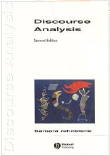 |
|
| Publisher: | Malden, Massachusetts: Blackwell Publishing | ||
| Pages | ISBN | Price | |
|---|---|---|---|
| Pp. xvii + 296 | ISBN 978-1-4051-4427-8 (paper) | $47.95 U.S. | |
Discourse Analysis, Second Edition, is the most recent publication in Blackwell’s Introducing Linguistics series. It is intended for undergraduates and graduate students encountering the world of discourse analysis for the first time. It will also be very useful for language educators (and those in training) who have an intuitive grasp of language use and verbal communication but who have not studied them formally. It would be useful as a stand-alone textbook for either a semester-long or quarter-long college course.
Among the appealing pedagogical features of the book are the discussion questions and ready-to-analyze discourse segments that appear at the end of various sections. Some of the data are in languages other than English, and students with advanced skills in those languages should find them particularly valuable. English examples are obtained from everyday contexts familiar to readers. The exercises incorporated into the book help students carry out mini-discourse analyses on their own, which the author believes (and I agree) is the most effective way to develop an understanding of discourse analysis quickly. This book uses the learning-by-doing methodology, distinguishing it from other introductory books on the subject. And it clearly benefits from the author’s rich synthesis of the field made possible by her long and distinguished career.
The book is composed of eight chapters, each of which leads naturally to the next. An introductory chapter begins by discussing the “facets” of discourse analysis (p. 8), using a specific set of texts, namely magazine advertisements and placards for a 1996-97 exhibition called “Splendors of Ancient Egypt.” Johnstone explains how discourse is shaped by the world, by language, by participants, by prior discourse, by medium, and by purpose; and how discourse also shapes these factors in turn.
This chapter provides an excellent portrayal of the author’s approach throughout the book. She provides evidence for her remarks whenever possible, even when basic tenets of discourse analysis are simply described. For example, in examining a wall-mounted label used to identify a mummy in the Ancient Egypt exhibit, Johnstone points out that the available space (and hence the size) of the label resulted in using jargon-like Germanic vocabulary in its exclusively English prose, distancing the mummy from the observer and foregrounding a Western cultural meaning (“artifact”). Glossing in a particular language, in short, can be seen as a political process: the label in this case frames the mummy as a de-contextualized curiosity. Specific illustrations such as this make the concepts Johnstone seeks to explain accessible to novice readers.
The remaining chapters address specific themes within which Johnstone introduces basic concepts often discussed in discourse analysis. Each chapter is broken down into several sections at the end of which we find the exercises I mentioned above. Chapter 2, “Discourse and World,” explores the ways language formulates the world in which we live, for example, how paraphrasing and linguistic categories reflect cultural mindsets and the worldviews embedded in them. Chapter 3 discusses how discourse is shaped by various kinds of structural conventions, and how these conventions are influenced by the purposes of the speakers who create the discourse. It explains the units of discourse–words, lines–then moves on to discuss paragraphs and episode units within a narrative. It also introduces the organizational rules and patterns governing talk-in-interaction, based on conversation analysis. Lastly, it touches on old and new information structure, based on functional grammar.
Chapter 4 shifts the focus from the discourse text itself to the speakers (participants) present where discourse emerges. Participants, or those who produce and receive a text, are crucially reflected in the text. Social relationships among them–power, social distance, relatedness among community members–are indicated in language use. The notion of indexicality is tactically introduced here along with these topics. Stance and styles employed in a speaker’s language use also index social meanings. The chapter extends its focus to discuss politeness, or how each participant behaves vis-á-vis the others. Then the author introduces the concept of face-threatening acts and accounts for our need to perform them as we socialize (p. 144). Consideration for others is also discussed in terms of “audience design” (p. 147). By designing their talk as the others would expect, people categorize others or themselves. This observation leads to a discussion of language use and the construction of social identity through discourse. Johnstone points out that individuals are always performing one or more identities, weaving together the concepts and themes introduced thus far.
Chapter 5 directs the reader’s attention to relations between texts, that is, intertextuality, or “the ways in which all discourse draws on familiar formats and texts, previously used styles and ways of acting, and familiar plots” (p. 191). Johnstone covers phenomena such as repetition in discourse (texts), and troping prior texts, words, phrases, and structures. Here she discusses how intertextuality leads to the construction of “genre.” Chapter 6 cites orality and literacy as the key media that also determine the shape of text. It also touches on different literacy practices found in the world. Other modes of discourse besides writing and speaking, such as technology-enabled media (for example, the Internet and hypertext), are also illustrated in this chapter.
Chapter 7 discusses a relatively advanced topic: namely, strategy and intentionality in the interpretation or design of discourse. Drawing on Speech Act Theory, Johnstone first examines how speakers perform speech acts (for example, an apology, an order, a promise), and then explores contextualization cues such as discourse markers (for example, expressions such as “well”, “so”, or “oh”) as strategic devices. The chapter then turns to consider discourse as “verbal art” or “performance.” Rhetorical strategies, how speakers design their discourse to persuade others to embrace a particular belief, are also discussed here.
In the last chapter, Johnstone explores general themes important in doing discourse analysis. One is the location of meaning (p. 263). Johnstone notes there are at least four possible locations where the meaning of a text may be found: in the speaker’s intention, in the literal text, in the audience’s interpretation, or in all of the above. Discourse analysts should consider all possible locations. Another theme is what language is; Johnstone suggests that it should not be seen as a static object, but as a process that she likes to call “languaging” (p. 267) that changes its shape and design through co-construction and negotiation among the speakers. The third theme raised in this chapter is the clash of perspective between discourse as adaptation to social and institutional contexts and discourse as strategy reflecting the agency of the participants. Johnstone argues that both perspectives add value and are necessary for a comprehensive understanding of discourse.
If the book has an overarching agenda, it is to show that the scope of discourse analysis extends well beyond the linguistics arena. Discourse analysis is not simply an independent discipline, but a “systematic, rigorous way of suggesting answers to research questions posed in and across disciplines throughout the humanities and social sciences and beyond” (p. xiii). Thus her intended audience is a broad one. Nevertheless, the book is extremely useful for applied linguists. Those teaching languages often have wide multidisciplinary interests, not just narrow sub-disciplinary ones. Hence this book will satisfy the curiosity of many TESL professionals, researchers and teachers alike. It also provides sufficient grounding for anyone who would like to pursue in greater depth the themes it introduces. As an entrée to the field, Discourse Analysis is highly recommended.
Keiko Ikeda
Nagoya University, Japan
<ikedakeiko nagoya-u.jp>
|
© Copyright rests with authors. Please cite TESL-EJ appropriately. Editor’s Note: The HTML version contains no page numbers. Please use the PDF version of this article for citations. |